Author: Maureen

Easter Treat: An Interview with Kate Forsyth

Easter Treat: An Interview with Kate Forsyth

Can you believe it? An interview with the great Kate just in time for Easter (and no I’m not talking about Australia’s favourite LOTR elven Queen). Kate has written a number of books for a wide range of genres and audiences. This is my first…

Australian Blog of the Year 2013

Australian Blog of the Year 2013

Hi again dear readers! I recently entered my blog into the Australian Blog of the Year 2013 contest under the writing section. It is run by The Australian Writers Centre and the prizes look great- writing courses galore! I also (rather crazily it must be…

NSW Writers Centre: The Speculative Fiction Festival

NSW Writers Centre: The Speculative Fiction Festival

Yes, yes, I know this is a whole week late but as regular readers know by now, I am always doing a million things- it must be written into my DNA or something (Incidentally I went into my work yesterday to speak to my boss about a grant application to start a writers group for people with a disability and she asked me if I ever slept. Nope, not really at the moment)

I don’t quite know how I missed the festival last year as I have been recieving NSW Writers Centre newsletters for an age but I assume it must have been the time it was placed in the year- right when I was starting my final year of university. Anyway, no use crying over spilt milk and all that, because I am so, so glad I managed to make it this year. I will endeavor to be charitable about the hard chairs that seem to always plague these kind of events. I took notes on all of the panels that I attended but will just pick the eyes out of my notebook pages and provide the highlights.
nsw writers centre

NSW Writers Centre

Panel 1: The International Speculative Fiction Scene featured Ian Irvine and Juliet Marillier, and was chaired by Dirk Strasser. Highlights included the Garth Nix quote:

“It only took me 17 years to become an overnight success,”

some discussion of percentages of book sales (who knew that Australians read so much fantasy despite our relatively small population?), discussion of Australia’s expensive book prices and the reduction of sales of sci fi especially (drop by 40%!) after Angus and Robertson went under and with some balm to all of the doom and gloom, words about emerging writer hopefuls. Juliet ended by saying that if a book is good, it will succeed but it is the writers job to ensure that they write what they are passionate about, take their craft seriously and stay original. Ian added that people who are committed to, and stick to, learning the writing craft will get published.

Next was a panel on The Future of Publishing with Joel Naoum (Momentum Books), Zoe Walton (Random House) and Dionne Lister (Editor and author) and chaired by Russell Farr (Ticonderoga Press). The short answer to the panel was that no one knew the future of publishing. Of course, it doesn’t take an Einstein to figure that one out with all of the confusion and knee jerk reactions littered about the interweb to ebooks and digital media and book selling giants like Amazon. In regards to self publishing, the (also kind of predictable) advice was to do it properly or not at all. Dionne, as the self published author on the panel offered some more concrete advice- ensure a pleasant and professional online persona, use social media, and use the fact that you are self published to be pro-active about sales. Joel Naoum also had a funny quote about how Choose Your Own Interactive Stories were like masturbation. It is probably on the twittersphere somewhere. Look it up.

Panel 3 I decided to go somewhere a bit out of my comfort zone with the Gothic Tales for Teens session. I do enjoy Victoriana settings and the supernatural and the so called ‘dark’ in my fiction. Besides, I already know all about allure of epic fantasy or I wouldn’t be slaving over writing it. Richard Harland chaired the goth panel with Sophie Masson and Alison Croggon in what turned out to be quite an informal and interesting conversation. I loved Alison’s comment that the Young Adult market provides the author with a lot of freedom because younger people are often less close minded about trying new genres or accepting weird and wonderful imaginings. Richard pointed out that the heroes journey mirrors quite closely a teen’s journey to adulthood; full of transformation and revelation. Having said that, YA speculative fiction doesn’t really have an age barrier. Educators and parents are often gatekeepers to YA books. So why do readers love the gothic, including fairy stories? The gothic allows for heightened emotion in a safe way- a form of expression. It’s about secrets and tension and fear and discovery; about mystery, darkness and isolation. It’s about sexuality and desire. These are all things that touch on the basic human experience.

Panel 4 dealt with Writing Speculative Fiction for Kids and was chaired by Ben Chandler. Garth Nix, Belinda Murrell and John Flanagan all were wonderful speakers so I also enjoyed this particular panel a lot. Belinda made me smile when she mentioned that she would never have continued to write if she had been offered too much advice- that much advice is paralysing. This is the same for me. I am a bit of a perfectionist and hate showing things to people till I know it is up to a certain standard. Garth made a nifty point about appropriation and the ways that certain authors (old guard American fantasy writers I am so NOT looking at you *cough*) bizarrely refuse to acknowledge the way that all authors draw from what they know. This does not mean that you are a hack. It means that you exist in a culture. This is a touchy subject for me and I am so glad that Garth “gets” it. Garth also made some great comments about ‘reading entry points’ when discussing categorising a work. For Garth, entry points refer to the age when a person will most connect to that story, but an entry point age does not negate people younger or older from also reading and enjoying. John (who is very funny) added that the biggest problem comes from bookstores categorising books and prejudicing readers against a book in that sense. Belinda made an interesting point about characters in the younger end of YA saying that because speculative fiction is a great escape, you need very real characters. Qualities like goodness and kindess and bravery need to be rewarded because otherwise what on earth are we teaching our children? Indeed, Belinda. That’s humanism. Glad we’re both on the same page.

I then had to dash away to do a ten minute mentorship session with Melina Marchetta (most famous for Looking for Alibrandi). Her two pieces of advice to me (aside from pay an editor to look at my ms structurally) was to always strive for my own writing voice without worrying about what others will think and to give strong consonants a work out, especially in titles. Great advice and I’m so glad that Melina is as lovely as my 13 year old self wanted her to be!

Panel 6 was a session on short stories because you know, I should probably get onto the whole short story submission thing. Dirk Strasser, Cat Sparks (who also took some lovely photographs of the day), Angela Slatter and Lisa Hannett all had great advice. All seemed to agree that there was a boom in novellas and short stories thanks to ebooks and a busy modern age. The list of professional paying magazines is growing but so are the amounts of submissions. The Science Fiction Association of Australia has a growing list of professional magazines which accept submissions. Dirk said that the key to a good short story is FOCUS. Angela and Lisa said have something to say, have a strong idea with fewer characters and get straight into action with crisis, choice and consequence key. Possibly my favourite piece of advice came from Cat: a short story is like a commando raid; get in quick with an explosive bang and then get the hell back out.

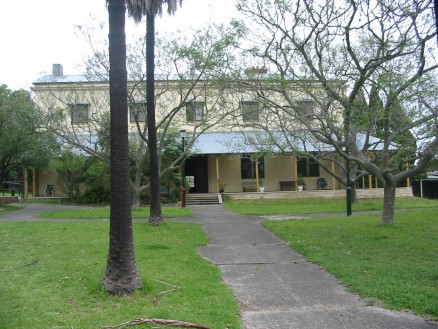
The last panel event of the day was a Q and A session with Garth Nix, Juliet Marillier, Ian Irvine, Kate Forsyth, Melina Marchetta and John Flanagan. I have to admit that I was pretty knackered by this point and stopped taking notes. Then it was time for Juliet’s book launch of Prickle Moon which turned out to be very atmostpheric amongst the cawing of ravens and a fading sun. Somehow I hadn’t quite realised that the NSW Writers Centre was on the old Callan Park Asylum until that moment. There was something touching about a book launch marked by a collective joy and love of reading taking place on a site of so much oft forgotten misery and sadness. At least to my mind.

That could have been the thesis talking.

NSW Writers Centre 2013 Speculative Fiction Festival was held Saturday 16th March. The Festival Director was Australian genre fiction great, Kate Forsyth. Congratulations to everyone involved for such a wonderful day!

Aussie Steampunk: Worldshaker/Liberator by Richard Harland

Aussie Steampunk: Worldshaker/Liberator by Richard Harland

Worldshaker/Liberator, Richard Harland Allen and Unwin, 2009/2011 Available from The Book Depository at a great price! I first read Worldshaker last year after Supanova but such is the nightmare that is a thesis that I didn’t get around to Liberator till last month. Finally, I…

Akhenaten by Dorothy Porter Review

Akhenaten by Dorothy Porter Review

Akhenaten by Dorothy Porter, University of Queensland Press, 1992 Reprinted 2008 Pan Macmillan Australia. $24.95 AUD RRP. I love Dorothy Porter. I own all of her verse novels except for Wild Surmise (It is only a matter of time, only a matter of time). I…

Romance in the spotlight: The Wild Girl by Kate Forsyth

Romance in the spotlight: The Wild Girl by Kate Forsyth

The Wild Girl, Kate Forsyth, Random House Publishers, 2013.
RRP $32.95 Australian.

The Wild Girl is Kate’s second foray into the adult historical fiction and romance genre and, much like Bitter Greens, her experimentation does not disappoint. A romance story which should appeal to readers of Paullina Simons and Juliet Marillier, a historical fiction that gives Philippa Gregory a run for her money and an example of exemplary fairy story scholarship, The Wild Girl is in turns beautiful, deeply disturbing, evocative and of course, like any good fairy story romance, features a signature happy ending.

The Wild Girl tells the story of Dortchen Wild, the girl who grew up next door to the Grimm brothers. Set in the nineteenth century in the German kingdom of Hessen-Cassel, Kate retells the story of Dortchen’s love for Wilhelm Grimm, exploring the poverty, tyranny and terror of Napoleonic Europe as well as a darkness found closer to home which continued to make marriage between the two an impossible dream. This darkness at the centre of the novel is kept at bay by the telling and reshaping of fairy stories, with the remoulding of the incestuous fairy story, ‘All-Kinds-Of-Fur’ a reoccuring motif in the novel. Each part of the novel is bookended by Grimm fairy story excerpts, cleverly reflecting and refracting elements of Dortchen’s own tale.

the wild girl

I very rarely read and enjoy romance fiction but this novel is also historical fiction, involves fairy stories, the brothers Grimm, and Germany, all of which are things that I like quite a bit. In recent years, both fairy story revisionism and the Grimm brothers have been flogged to death. In popular culture, the recent police procedural tv show Grimm has riffed off the brothers stories for a modern audience and The Brothers Grimm (2005) starring Matt Damon and Heath Ledger played fast and loose with history and used fantasy to speculate on how the Grimm brothers sourced their stories. A number of Grimm fairy stories have been appropriated again and again for modern audiences, including Six Swans, Snow White, Cinderella, and Rapunzel. In one of the more interesting fairy story appropriations, there has even been a Tony award winning Broadway musical featuring the memorable rapping witch, Bernadette Peters, in a post modern opretta. With songs like Children Should Listen, Last Midnight and No One is Alone, Sondheim further cemented himself as a musical composer and lyricist of considerable skill with Into The Woods. So where does that leave The Wild Girl? With so much fairy story retelling and post modern twisting and interest in origin stories, you’d be forgiven for thinking that Kate had boxed herself into a corner writing about the Grimm’s.

Happily she doesn’t. This is because, as she did with Bitter Greens, Kate spends an inordinate amount of time researching to give voice to the forgotten women in European history. Her emphasis on quality research ensures an equally valid account of Dortchen Wild’s relation to the Grimm brothers as any other historians guess. The story is strong, sensitive and well written. I whirled through the many pages. The story is not anachronistic and conversations feel real. I can only imagine how many hours Kate spent slaving over this manuscript to get the tone, the dialogue and the characters so right. A stunning achievement, and a book that I would reccomend to anyone interested in romance, historical fiction or fairy story interpretations.

The Wild Girl: 4/5 inky stars
Am advance copy of this book was supplied by the author. The Wild Girl comes out 18/03/13.

10 Steampunk Titles You Should Know About

10 Steampunk Titles You Should Know About

I intended to write this post aons ago but my novel rewrite has made blogging harder than expected. Anyway, I have picked out 10 steampunk books for the newcomer to the genre to start with to get a feel for the genre itself. 1. The…

Silkskin and the Forest Dwellers/Lord of Shalott Novella Reviews

Silkskin and the Forest Dwellers/Lord of Shalott Novella Reviews

Silkskin and the Forest Dwellers/Lord of Shalott, Jay Mountney, Smashwords, 2012, Ebook price: $2.99 US. I was given a free copy of Jay Mountney’s Silkskin and the Forest Dwellers months back but with finishing university and a new job, I scarcely had time to read,…

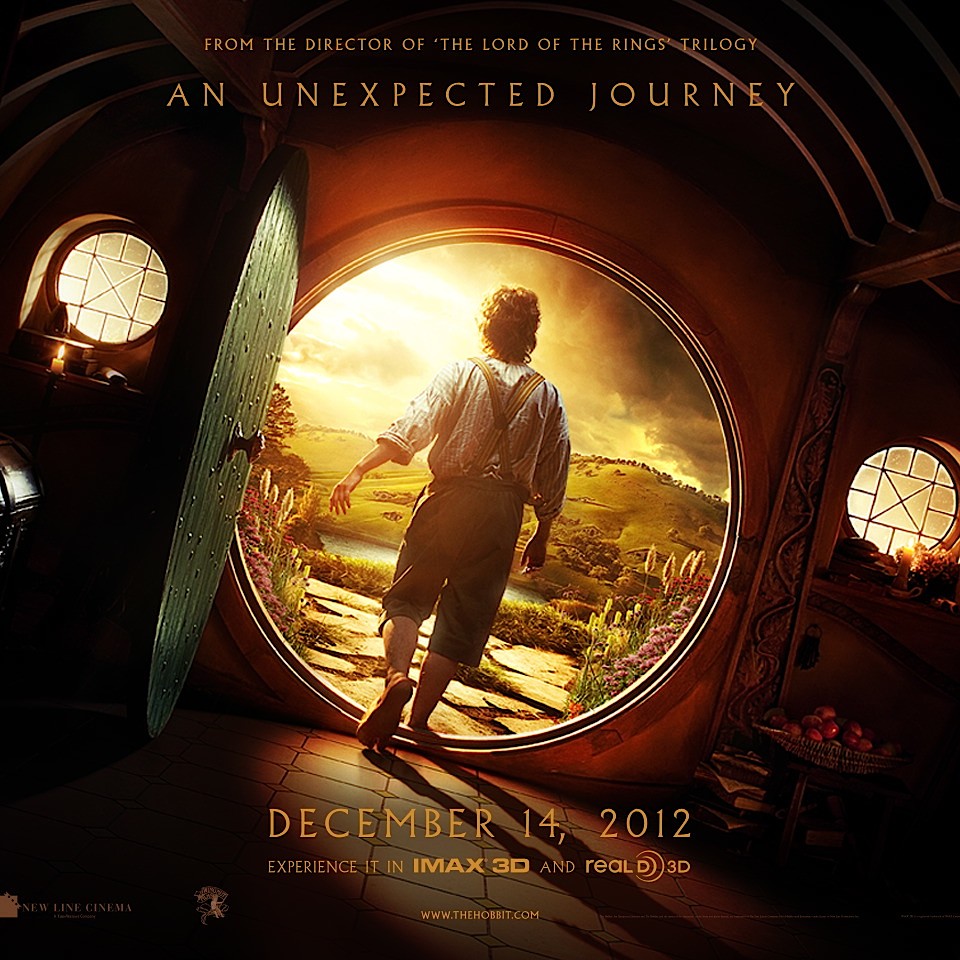
The Hobbit: An Unexpected Journey

The Hobbit: An Unexpected Journey

By now most nerds worth their ‘nerdier than thou’ badges will have seen this film. Is the first part of The Hobbit worthy of the accolade of Star Wars prequel level awful (which by the way isn’t that bad in my opinion as I shamelessly enjoyed Attack of the Clones and happen to think that Revenge of the Sith was a borderline masterpiece film) or is it better than Lord of the Rings because of its light hearted tone? Does the film merit three hours and two more films to tell its tale or is it a shameless Hollywood gimmick geared at grabbing more out of our wallets?

The Hobbit: An Unexpected Journey tells the story of Bilbo Baggins; a hobbit who ventures out of his comforting hobbit hole in the company of a wizard, dwarves (and without his pocket handkerchief!) to face a dragon in the enigmatic role of ‘burgler’ to reclaim dwarf gold. Alongside this deceptively selfish quest, Gandalf, Radagast the Brown, Saruman, Elrond and Galadrial fear the rise of the dreaded Necromancer, the witch king of Angmar (Sauron voiced by the increasingly more popular and ever brilliant Benedict Cumberbatch of BBC Sherlock fame) so that perhaps Thorin’s quest to reclaim dwarf gold is less selfish than first assumed.

the hobbit

Serving as a prologue to the events of Lord of the Rings, I have always found The Hobbit to be a bit of a strange book. This is mainly because Tolkien’s style changes totally between The Hobbit and Lord of the Rings. Events become grander, language becomes more high falutin, and the reading audience changes. I prefer to read The Hobbit. I love the freshness of the hobbits in their first appearance, I love the way that Bilbo grows throughout the story and the hubris of the dwarves. Lord of the Rings is a more ambitious story and a better one, but The Hobbit is better written. In the case of the films, I prefer to watch Lord of the Rings but I think I prefer to read The Hobbit.

Why? I like what Jackson has attempted to do with merging the stories of The Silmarillion with The Hobbit. It serves as a good prelude to the events of Lord of the Rings. The problem with this choice is that the film moves too far away from Bilbo (Martin Freeman also of Sherlock fame but this time as sidekick Watson) and aside from the beginning of the film in Bilbo’s hobbit hole and the riddle in the dark sequence, the core of the film becomes Thorin’s anger about the elves or the doings of wizards.

I also thought that some of the liberties taken from book to film were unnecessary. Why change the way that the trolls turn to stone when it was excellent in the first place in the book? Why change the way that the goblins on their wargs trap and taunt the party from the chapter ‘Out of the Frying Pan and into the Fire’? There is no earthly reason to do so dramatically or thematically so why bother? I didn’t like the way the goblins looked, especially the goblin king. Creatures looked less naturalistic than they did in Lord of the Rings which I found distracting in places. Shore’s score was largely recycled from Lord of the Rings which I also found a bit flat and distracting.

Despite these issues with the film, I didn’t hate it. Not by a long shot. It bears remembering that Jackson’s initial trilogy is a cinematic masterpiece- widely considered to be amongst the top 100 films ever made and definitely three of the best speculative fiction films ever made. The Hobbit was always going to be anti-climatic because its story simply doesn’t have the scope of Lord of the Rings to start with.

Factoring that in, I loved that Jackson had Bilbo recite the first line of The Hobbit; “In a hole in the ground there lived a hobbit. Not a nasty, dirty, wet hole, filled with the ends of worms and an oozy smell, nor yet a dry, bare, sandy hole with nothing in it to sit down on or to eat: it was a hobbit-hole, and that means comfort.” I got a fannish shiver down my spine of utter delight. I loved Freeman as Bilbo. I think he was brilliant and hope that he gets more of a chance to shine in the next two films. I loved the bitter despair of Richard Armitage’s Thorin. I loved that Jackson transferred songs from the book to film with the help of Shore. Personally I would have disowned him if he had left out ‘Carefully, Carefully with the Plates’ and the dwarves rendition of ‘The Misty Mountains Cold’ was truly beautiful. I loved the entire reappearance of Gollum and the riddles in the dark sequence through to the claiming of the one ring.

There was a masterpiece film somewhere in here. Some scenes were utterly brilliant but the rest of the film was merely good. Which ironically, is still an enormous achievement however you look at it. The three hours breezed by and I still had a great time with the characters. It’s just that The Hobbit is no Lord of the Rings. But hey, we all knew that that was a foregone conclusion before The Hobbit even hit cinemas, right?

The Hobbit: An Unexpected Journey: 6/10 inky stars.

Novels in Verse 2013 Reading Challenge

Novels in Verse 2013 Reading Challenge

http://bornbookish.blogspot.com.au/2013/01/novels-in-verse-reading-challenge-sign.html?spref=tw I am signing up for Haiku (reading and reviewing 1-4 verse novels). I haven’t had the chance to read a lot of verse novels before, but the ones I have read I have liked. Especially the ones by Dorothy Porter. I am open to verse…