Author: Maureen

Maureen’s 50 in 50 list: Go to Broadway and see a musical

Maureen’s 50 in 50 list: Go to Broadway and see a musical

I can’t believe I haven’t filled faithful readers of this blog in on where I am at with my 50 in 50 list. Since 2015, I’ve checked a couple of things off so in the next couple of weeks I’ll be posting updates with what…

First pro short story publication!

First pro short story publication!

I can’t believe how forgetful I am sometimes, and especially when it comes to the poor readers of my blog! Late last year, I submitted a short story to CSFG’s bi-annual anthology and was lucky enough to get into my first ever pro short story…

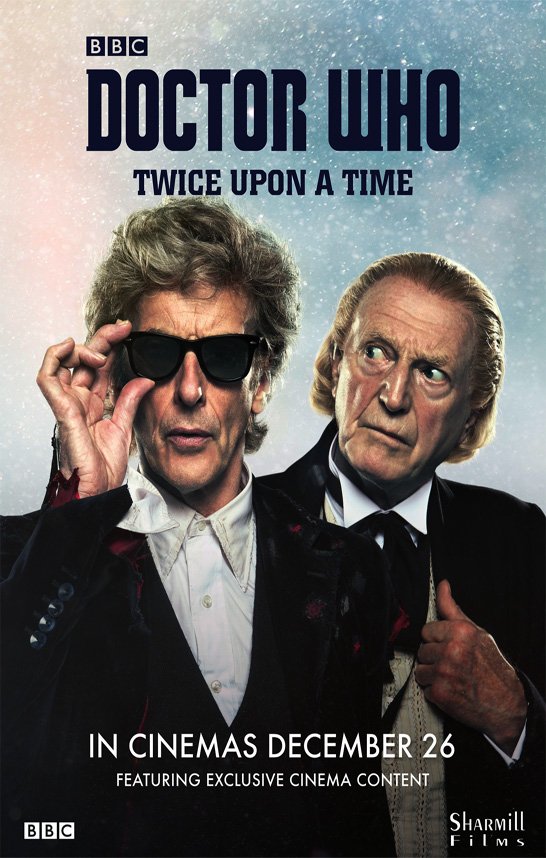
Doctor Who Twice Upon A Time Review

Doctor Who Twice Upon A Time Review

Time to remember how to log into my WordPress again folks because it’s time for Moffat’s final Christmas special. Capaldi’s too. And we all know what that means, right? An Inkashlings Who review. So what did I think of Twice Upon A Time? It was an episode that felt more like a coda to the series 10 finale than anything else. It didn’t feel like a story as such. Having said that, it was less frenetic than Matt Smith’s regen episode and less annoying than David Tennant’s.

So what happened? The Doctor and The Doctor show up in the same time zone in the North Pole, both afraid to regenerate. A soldier (played by Mark Gattiss) turns up, snatched by a mysterious something from the battlefields of 1914 just in the nick of time. Two Doctors must work together to figure out what exactly is at play here.

The Soldier

Mark Gattiss may be a questionable Who writer in my book, but there is no doubt that he is a good actor. Gattiss played the part of the death resigned soldier to perfection, with the right mix of fright, gravitas, bravery and British stiff-upper-lip on display. It’s pretty soul destroying when The Doctor mentions World War One casually and the soldier replies with ‘what do you mean, one?’ It was a nice twist that the soldier was a Lethbridge-Stewart and I must have been the only viewer who didn’t see the 1914 Silent Night moment coming.I choked up a little. One last fairy tale moment delivered curtesy of Twelve. Twelve may have felt a more grounded Doctor than Eleven, but he never forgot to believe in fairy stories, and Moffat never truly moved away from writing Who as a fairy tale. Sometimes Moffat fairy tale trope moments don’t feel earnt, but this time I think it was.

The First Doctor

Appalling recasting of Polly and Ben aside, this was quite a good attempt at recreating The First Doctor’s era. The TARDIS exterior and interior looked right, and most importantly, David Bradley is excellent as a William Hartnell look alike. I agree with others who thought some of the sexist lines were overdone, but it didn’t bother me enough to destroy the whole episode for me, especially as Bradley played One with such gravitas and world weariness (what a versatile drama actor this man truly is) I couldn’t help but forgive.

Moffat goes in for one last retcon as he adds a coda not just to Twelve, but to One too.

One: You may be a Doctor, but I am the original Doctor… I have the courage to live and die as myself.

Or so One claims. Later we find out he is refusing regeneration because he is afraid, very, very afraid. It takes Twelve’s Christmas miracle in saving the soldier’s life to give One the courage to regenerate, knowing as it were, that he will become a very good man indeed.

But my favourite part of the episode for One, delivered perfectly by Bradley, is a small conversation he has with Bill about why he stole the TARDIS and ran away:

One: By any analysis, evil should always win. Good is not a practical survival strategy. It requires loyalty and self-sacrifice and love. And so, why does good prevail? What keeps the balance between good and evil?

Bill’s response that The Doctor never figures out how much of a hero he is to so many is laid on a bit too thick for my liking (it’s the heroism trope that makes Ten one of my least favourite Doctors and at any sign of it rearing its ugly head again I immediately start to panic), but the lines from One are a kind of poetry. Bravo Mr Moffat indeed.

Memories

Moffat has been interested in the theme of forgetting and remembering since Series 5 and Amy Pond and it rears its head again in an overt way with his finale. The Testimony are not an enemy (for once), but a way of storing the record of a person’s life so that the dead can continue to speak beyond the grave. Bill is a glass woman, part of Testimony, but she argues it is memories that make us and so, glass woman Bill is still Bill. Similarly, Clara and Nardole are able to say goodbye to Twelve through Testimony. The Bladerunner franchise asks us what makes us human, and it seems that Moffat, like Philip K Dick, believes that memories more than genetics and our skin and bones, makes us truly human.

Twelve’s final moments

I quite liked Eleven’s farewell speech. It was short, simple and to the point. Capaldi’s final moments are a little longer, but are delivered well.

Twelve: You wait a moment, Doctor. Let’s get it right. I’ve got a few things to say to you. Basic stuff first.

Never be cruel, never be cowardly. And never ever eat pears! Remember – hate is always foolish and love is always wise.

Always try, to be nice and never fail to be kind. Oh, and….and you mustn’t tell anyone your name. No-one would understand it anyway. Except…. Except….children. Children can hear it. Sometimes – if their hearts are in the right place, and the stars are too. Children can hear your name.

The lines that came after, in my opinion, were overwritten (but then, Moffat has a habit of over-writing in his speeches instead of letting people interpret what he means for themselves – see the series 8 finale), but I did like Capaldi’s final words… Doctor, I let you go.

Capaldi didn’t become The Doctor for me until the end of Series 8, but when he did, he did with a vengeance. I will miss the actor’s quiet dignity.

Having said that, I don’t know about anyone else around here, but I’m mega excited for Jodie Whittaker as Doctor 13. I can never tell from the 30 second short they give you of a new Doctor if they are going to be good or not, but I got a definite Matt Smith vibe from Jodie, and I liked Matt as The Doctor very, very much indeed. I’m not always a fan of Chris Chibnall’s writing, but he can write good quality drama when he tries so this could be a very interesting next series indeed. Why, oh why, do we have to wait months for the next episode?


Twice Upon A Time:
7/10 inky stars for a slight if heartwarming final story for Twelve

Towards White Book Review

Towards White Book Review

Towards White Zena Shapter Publisher: IFWG Publishing First Published: 2017 RRP: $29.95 Disclaimer: Zena and I attend the same write in group once a month-ish. However, the publisher gave me a copy of this novel in exchange for an honest review. Interesting fact about me:…

Doctor Who The Doctor Falls Review

Doctor Who The Doctor Falls Review

Well! That was Matt Smith’s The Time of the Doctor done right! That was the multi Master story I never knew I wanted! With the exception of the weird deux ex machina at story’s end, that was a near perfect Who finale! Heck! That was…

Doctor Who World Enough and Time Review

Doctor Who World Enough and Time Review

So I had to leave some processing time between initial watch and the rewatch of this episode and the finale to be able to review. Though I wouldn’t go as far as the Radio Times, who labelled World Enough and Time as the best episode of New Who, I can see how it came close. I wish the BBC hadn’t spoiled the return of the Mondasian cybermen and John Simm Master, because this episode would have been Earthshock level of drama bomb, without those pre-episode spoilers. Still, I’m pretty confident when I say this is the best episode of the series to date and the first 10/10 episode since last year’s Heaven Sent (also last year’s penultimate episode interestingly).

This week we have the full blown return of Missy with The Doctor testing Missy’s redemption arc by asking her to fill his role in the story (much like Clara did in the series 8 finale) with Bill and Nardole as her reluctant companions. She seems true to her word. The trio land on a ship getting sucked into a blackhole after The TARDIS intercepts a distress call and Missy, albeit with some sly digs, does try to get to the bottom of the problem. And then things go horribly wrong…

The End is My Beginning (and vice versa)

Surprisingly for me, the shock start to this episode was one of its least interesting aspects. The Doctor begins regeneration in a winter wonderland and then before we know it we’re into the opening credits and the story goes back in time. Presumably, it will be the Christmas special which sheds light on this opening sequence so little can be judged about it or its place in the story arc till then.

Two Good Friends

I am one of those people who didn’t like Capaldi till the end of series 8. He was too extreme in his curmudgeonly nature, a little too harsh and cold and cruel to poor Clara. For me, it was the clash of belief systems in The Doctor and Missy in the series 8 finale which sold me Twelve. It was in Dark Water where he told Clara, ‘did you think I’d care for you so little that betraying me would make a difference?’ and when he said to Missy in the Death in Heaven, ‘Thank you. Thank you for reminding me…’ speech that Capaldi became The Doctor to me. For me, then, Missy is key to Twelve and her stories with Twelve and the stories of Twelve which she impacts upon (such as the series 9 finale two parter) are the most interesting. They cut to the heart of the difference between The Master and The Doctor.

This Doctor yearns with all of his two hearts to have his friend back. Why? Not because he likes and cares for his human and other species companions any less (lest we forget that they remind him why he needs more than the Time Lords to fulfil the promise implied in his name), but because The Master was one of his oldest friends.

The Doctor: She’s the only person I’ve ever met who’s even remotely like me… she was my first friend. From my first day at the academy…

They are almost the same, but for one key difference which Capaldi told Clara in the series 8 finale and he repeats it again to Bill in this episode:

The Doctor: We had a pact, me and him. Every star in the universe. We were going to see them all… she never saw them. Too busy burning them…’

But like The Doctor and Missy called and responded to each other in Extremis (I upped my star rating on that one to 9/10 it got that much better with a re-watch), ‘without hope, without witness, without reward,’ The Doctor believes that Missy can change. She can learn to be a true friend.

Bill is afraid of Missy and with good reason and she cannot possibly understand why The Doctor would want to give Missy more chances. Just as Clara didn’t understand. The Doctor tries to argue that morality and ethics aren’t so simple. That the pig who made the bacon on Bill’s sandwich might see her eating that bacon as murder. That the ethics and morals of Time Lord actions are somehow relative and different. ‘Different how?’ Bill demands and The Doctor cannot answer her.

But we as viewers already know the answer gifted to us via River Song:

River’s Diary: Only in darkness are we revealed. […] Goodness is not goodness that seeks advantage. Good is good in the final hour, in the deepest pit, without hope, without witness, without reward. Virtue is only virtue in extremis.

More on this next week…

Bill

Capaldi has had quite a few complex and dark episodes which would have confused and terrified me if I had been viewing them through a child’s eyes. World Enough and Time is no different. It is genuinely one of the most alarming stories New Who has ever done. The Doctor admits, as he sits on the rooftop with Bill, that he can’t make promises about her safety, that he can merely keep her safe within reason. Travel with The Doctor is wonderful and glorious and life changing, but it is mortally dangerous too. Rose is separated from The Doctor in a parallel universe, Martha is psychologically scarred by her encounters with The Master and the impact he had on her family, Donna forgets everything of her travels. Only Amy and Rory and Clara live happily ever after, and Clara only because she has lost all normal earth ties.

I suspected something terrible would happen to Bill. I didn’t suspect that she would be shot in the chest by an ally in the opening fifteen minutes. But deaths are meaningless in drama without consequence. So Moffat showed us the world Bill inhabited whilst, like Amy, she waited (the blackhole explanation for the difference in time between above and below made perfect sense too which was a nice change for a show which often does a lot of hand waving to get emotional beats to work). The combination of ‘asylum’ stereotypes in Matron and Razor as well as the body horror of the bandaged people was both Gaimanesque and genuinely unsettling. Indeed, the echoes of the people beneath the bandages was the most unsettling and upsetting thing Doctor Who has done since ‘don’t cremate me’ in Dark Water (another story about The Master, cybermen and contorting humanity, but then again with Moffat, my end is my beginning). The cliff hanger ending is truly heart breaking as a cyberman says to The Doctor, ‘I waited… I waited… I waited for you.’ Would Doctor Who really turn such a beloved companion into a cyberman and then follow through by showing the consequences of that conversion in the series finale episode? It certainly seemed that way.

The Master

Surprisingly, I didn’t recognise John Simm’s voice as Razor under all of the prosthetics. I was deeply upset by his interactions with Bill. I knew there was something horribly wrong about him as a character, but it wasn’t till episode’s end in his show down with Missy that I realised who Razor was. But then… The Master did so love disguises in classic Who.

This version of The Master especially, doesn’t understand how to ‘do’ human companions right. He got it wrong with Lucy Saxon, and he gets it wrong a second time with Bill.

Razor: You are dear to me. You are dearest person. Like a mother. When you hug me, it hurts my heart.
Bill: Aww sweet.
Razor: No. Your chest. It digs right in.

This version of The Master only knows how to self-destruct, bringing down everyone else in his wake. He only knows how to hurt and frighten and to act the callous wolf in sheep’s clothing. He wins Bill’s trust over years and then leads her to the upgrade chamber to ensure she will stop caring about pain because Bill is loved by The Doctor. This Master thinks that converting a companion into a cyberman will see The Doctor wallow in self-pity Ten style. He thinks that his success in fooling Bill is a form of oneupmanship. But he doesn’t know just how much the rules between him and The Doctor have changed through Amy and Rory, through River, through Clara, and finally through Missy. Hence:

The Master: Hello Missy. I’m very worried about my future.

Though the literal meaning of this episode’s title is about the difference in time between those closest to the black hole on the ship and those furthest away, it is really an application of the poem ‘To his coy mistress’ by Andrew Marvell:

Had we but world enough and time,
This coyness, lady, were no crime.

By episode’s end, the poem refers to more than simply Bill waiting for The Doctor. It is a terrible tragedy not just about Bill or about The Doctor strangely, but also first and foremost about The Master. The Master does not have world enough and time to decide how he wants to express his relationship with The Doctor. His coy acts of teasing The Doctor with false hope cannot go on forever, and eventually you have to choose what you really want and what ideals you really believe in. But can a villain ever really change his or her spots? Should we believe it’s possible and why does it matter to believe? Next week’s finale held the show runner’s answers in the strongest finale since series 5…

World Enough and Time: 10/10 inky stars

Doctor Who Eaters of Light Review

Doctor Who Eaters of Light Review

Review disclaimer: A friend of mine commented on my low score for the previous Gatiss penned episode. By way of explanation, it’s pretty tough to rate Who episodes out of 10 from week to week anyway given the wide range of genres and scenarios the…

Doctor Who Empress of Mars Review

Doctor Who Empress of Mars Review

Well that was a surprise. I actually kinda enjoyed that. I’ve said before on numerous occasions that Gatiss isn’t my cup of tea on Who every time. For every Crimson Horror, there is a Victory of the Daleks and I’m never sure from season to…

Doctor Who: The Lie of The Land Review

Doctor Who: The Lie of The Land Review

This week is a Toby Whithouse oddity. I mostly enjoy his work on Who. I’ve enjoyed every episode he’s written with the exception of Under the Lake/Before the Flood, and even then I thought they were average Who episodes rather than terrible ones. I had high hopes he’d end the monks trilogy with a bang. Alas, it was not to be…

Orwellian Nightmare

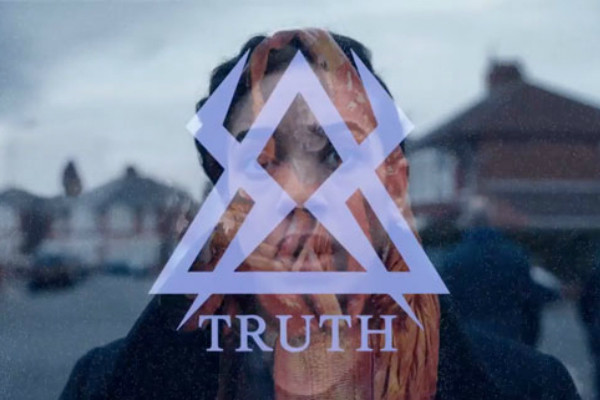
So what happens? The story kicks off a little after we left off last week, with Bill and Nardole trying to find The Doctor to end the monks totalitarian rule of earth. The opening fifteen to twenty minutes reminded me of a combination of the superior Turn Left (one of the best episodes in Donna Noble’s run) and The Last of The Time Lords with Martha’s quest to stop a mad Master plot. The monks show humanity over and over via ‘truth’ sound bites aided by a captured Doctor who speaks live into people’s minds about the benevolence of the monks who have aided human development and history so altruistically. Up until his companions find The Doctor, I really dug the episode.

The Doctor and his Companion

What went wrong? The Doctor’s explanation of why he’d choose to help the monks makes sense, but it felt off that a) Bill shot The Doctor and that b) The Doctor would devise such a cruel test to check in on Bill’s independance from the monk’s. It’s not that it’s a bad idea on Whithouse’s part, it’s that it doesn’t really have enough character basis from previous episode’s or this one to help the audience to agree that both Bill and The Doctor’s actions are reasonable.

And what’s worse, the script makes the mistake of not giving people consequences for their actions. True: this is something New Who has never been good at (Look no further than the selective forgetting that was Ten from Waters of Mars to End of Time or Kill The Moon Clara to Mummy on the Orient Express Clara). In general, I find that script writers for drama shows are terrible at committing to character consequences they themselves have set up. And this sort of shoddy writing was just as annoying in this week’s episode of Who as it is when I find it elsewhere in drama. Surely Bill should be proper traumatised by The Doctor’s actions. Surely she should be pretty angry at him, if not immediately given the monk invasion problem, by episode’s end. She’d be feeling betrayed, a lack of trust, rage, hurt, confusion. Shed be questioning the morality of the Time Lord she finds herself travelling with.

And then we get to the second annoying writer trope I always see in TV drama, which annoys me every time I see it: raise the stakes by claiming someone important to the viewer has to die, and then come up with hand wavey nonsense to justify why said person makes it to live to another broadcast date. Sometimes narratively a character has to say goodbye, and if, as a writer, you don’t want that character to die, don’t set up a story scenario which relies on the character dying for full emotional and dramatic satisfaction. Missy is truly wonderful when she tells Bill, Nardole and The Doctor that Bill needs to die to stop the monks, but it all feels wasted in the end.

The Power of Love

The ability for love to conquer evil has long been a preferred Moffat theme. As a viewer, I am generally in the group of people who doesn’t have much of a problem with this particular theme, especially in the Smith era, which was told through the prism of a fairy story structure anyway making the love theme easier to swallow. However, I don’t think it has as much place in Twelve’s era. It came up in the series 8 finale with Danny and Clara, and was mildly annoying then, though at least the love theme made sense in terms of deleted emotions and cybermen. This time around, I have absolutely no idea how Bill’s memory’s of her mother damaged the monks. I am not quite sure how Bill isn’t dead.

Missy

At least the episode ends on a high with Missy. I could watch Michelle Gomez as Missy, especially a more muted Gomez as she is in this series, forever. My partner and I would both be happy campers at the Missy o’clock spin off show, comprised entirely of Missy messing with everyone she ever meets and killing off a lot of her temporary companions in nefarious plots geared at either saving her own skin or world domination of some kind.

Surely no one thinks Missy has reformed. Surely The Doctor doesn’t believe it. Though oh how much he wishes it might be so. Missy is the scorpion stinging the frog even as it float’s on the frog’s back. Missy is putting your hand into a jar of poisonous, hungry spiders. Missy is snake venom dialled up to eleven on the pain scale as it works through the bloodstream. And this end scene just makes her all the more chilling. Crocodile tears or the real deal. Somehow I don’t think it matters much either way…

The Lie of the Land: 5/10 inky stars for the weakest episode of the series so far…

Next episode is Gatiss. Yawn. Moving right along.

Doctor Who The Pyramid at the End of the World Review

Doctor Who The Pyramid at the End of the World Review

…Or that was a bit disappointing after last week’s strange confection. I loved Peter Harness’ series 9 Zygon two parter and loathed his abortion metaphor in Kill The Moon (not to mention the waste of a particularly strong guest star in Hermione Norris). A writer…